


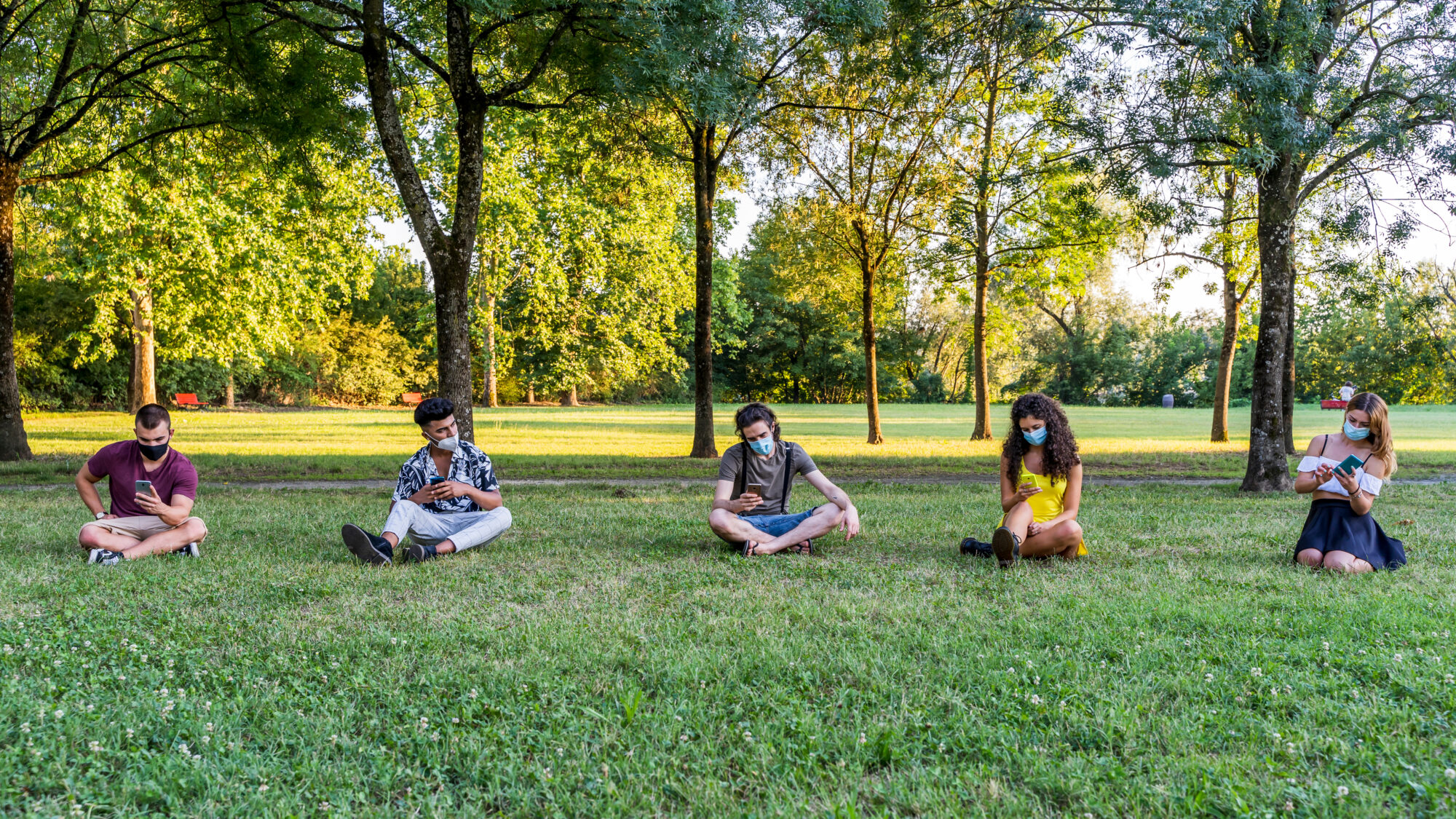
People live in predetermined spaces – but they also shape them themselves. The Covid-19 crisis demonstrated the importance of living spaces, especially for marginalised groups. This is the conclusion reached by two projects run by the National Research Programme “Covid-19 in Society” (NRP 80).
In the wake of the pandemic, it is time to look ahead to the next public health crisis. Switzerland was seriously impacted by the Covid-19 crisis between 2020 and 2022. Not everyone was able to escape the dangers associated with the pandemic and some were particularly vulnerable, including the elderly, low-paid workers and young people. Because in hindsight, the dangers were not only of an epidemic nature; there was also the risk of isolation, depression and insecurity, despite government assistance.
The protective measures implemented by the authorities overlooked certain groups or even had the opposite effect: they exposed people instead of protecting them. This was not due to a lack of intent or ill will, but rather a lack of understanding of the realities of life – and living spaces. Living spaces are more than just geometry and parameters. This is one of the findings gained by scientists from the National Research Programme “Covid-19 in Society” (NRP 80).
“Stay at home, save lives!” This was one of the first public directives issued by the Federal Office of Public Health. It had varying impacts on those who followed it. People who could work from home, who owned a house or maybe even a holiday home, were comfortably protected. Some young people, on the other hand, found themselves alone or cooped up with their siblings in small rooms for weeks on end – along with their smartphones and laptops.
“At first, young people didn’t mind; they could sleep in and had more time for themselves,” says Anke Kaschlik from ZHAW Zurich University of Applied Sciences. “But over time, the isolation began to bother them. They missed their friends and social interaction at school.” Anke Kaschlik is an urban researcher at the Institute of Diversity and Social Integration. As part of NRP 80, she led the “Urban spaces for young people” project. She and her team conducted workshops with Zurich school children, speaking with over two hundred young people. They also interviewed specialists, including youth workers and police officers.
Car parks and bus shelters as places for youngsters to gather
The pandemic was a life-changing experience for many young people, as the researchers’ work shows. Youngsters need publicly accessible spaces that they can explore, use and make their own. Having to stay at home was not only unpleasant for many, but also restricted their development. “Easily accessible spaces to gain experience, relax and be themselves are essential for experimentation, self-expression and gaining independence,” says Kaschlik.
Even in normal times, it is not easy for young people to find their own space. They are often overlooked, both by spatial planning and societal use of space. While youth clubs do exist, they only meet some of their needs, so young people hang out in car parks and bus shelters. But when they meet in playgrounds or residential gardens and parks, conflicts often arise with adults who complain about noise and litter. After ten o’clock in the evening, residents immediately call the police.
This situation worsened during the pandemic. “The balance of power in spatial use shifted even more to the detriment of young people, as their needs were sidelined and neglected to protect other groups,” says Kaschlik. Previously accessible places were closed, opportunities for social contact were restricted and easily accessible meeting points were monitored by the police.
Many young people found themselves in a dilemma, with some suffering from mental health problems. They retreated to woodland near the city, large parks or lakes. Walking, running or being on their own outdoors became their new routine. “These experiences changed young people’s perceptions and their social interactions,” says Kaschlik. A few even had run-ins with the police. The researchers interpret this behaviour not only as a form of protest but also as an insistence on acting autonomously.
Cynical official directive
The “Stay at home!” slogan was double-edged for young people, especially those who had no choice but to go outside, due to their cramped living conditions. For bus and tram drivers, cleaners, delivery drivers and nursery staff, the directive was clearly misplaced: “The slogan must have sounded cynical to these people because they couldn’t stay at home even if they wanted to. They had to go to work,” says David Kaufmann, Professor in the Civil, Environmental and Geomatic Department at ETH Zurich. The political scientist led the “Urban essential workers” project within NRP 80. Together with his team, he investigated the day-to-day realities of life in Zurich, Geneva, Basel, Lausanne and Bern. Healthcare professionals were not included because they had already been in the public eye. In total, the researchers spoke with nearly fifty people, many of whom were migrants, as well as with eighteen experts.
The majority of interviewees felt exhausted, excluded and invisible. They said they felt under-appreciated. “Without these workers’ services, society wouldn’t function, but they rarely benefit from it,” says Kaufmann. They are poorly paid, working in nurseries and cleaning homes they cannot afford. Their children are cared for by relatives. Although they work in city centres, they live in the suburbs, where they find affordable but often uncomfortable housing: small, noisy and poorly insulated.
Good living conditions are crucial in ensuring that these workers can relax after work and take care of themselves and others. “Housing isn’t just a physical structure, but a form of social infrastructure that is essential for care and reproduction,” says Kaufmann. During the pandemic, conditions worsened for these workers, who often felt trapped when they were at home. Areas with cramped living conditions experienced the highest infection rates and increased domestic violence. “The pandemic not only made inequality and insecurity visible; it also exacerbated them,” says Kaufmann.
Monitoring and crisis planning with young people
What conclusions do political scientist Kaufmann and urban researcher Kaschlik draw from their work? For Kaschlik, it is clear that youth workers and school representatives, as well as young people themselves, must be involved in future: “Young people and their needs must be part of crisis planning at all levels, from federal government to cities and municipalities. This is the only way their interests will be given equal consideration. Yet again, the government’s new pandemic plan fails to include young people.”
Kaufmann emphasises the fact that Switzerland needs better “socio-spatial monitoring”, i.e. the analysis of data on different living and working spaces: “Where are social infrastructure and green spaces located, who has access to these spaces and where are the densely populated areas located?” This data is available, but is not being used. “This has to change. So that in a future pandemic targeted measures can be taken to contain infections – with information campaigns, masks and effective interventions in schools.” Hopefully, will no longer see a blanket “Stay at home!” message applied throughout the entire country.
References:
NRP 80, research project “Urban spaces for young people”
NRP 80, research project “Urban essential workers”

