


The Covid-19 pandemic forced schools, courts and families to switch to digital communication and working practices at very short notice. Some of these changes have remained in place even after the crisis. However, researchers from the NRP 80 ‘Covid-19 in Society’ show that digitalisation creates new opportunities – and new obstacles.

In spring 2020, digitalisation suddenly went from being a project for the future to an emergency measure: due to the protective measures against Covid-19, employers had to equip their staff to work from home at very short notice. Video conferences replaced meetings and school lessons, whilst WhatsApp and voice messages became essential for keeping in touch with friends and relatives. However, whilst the pandemic permanently accelerated digitalisation in some areas, the momentum remained limited in others. This is demonstrated by three projects within the National Research Programme ‘Covid-19 in Society’ (NRP 80).
There is clear evidence of the surge in digitalisation in schools. As part of the ‘Digitising educational practice’ project, Valentin Unger from the St. Gallen University of Teacher Education (PHSG) and his team examined, amongst other things, usage data for digital learning support platforms in the canton of St. Gallen. When schools closed, usage of these platforms increased sharply. “Although usage fell again once schools reopened, it remained significantly higher than pre-Covid-19 levels in the years that followed,” says Valentin Unger.
In Swiss courts, too, the protective measures accelerated digitalisation, as the ‘Digital justice in family law’ project shows. “However, there was no widespread surge – the pandemic came a little too early for the judiciary,” concludes co-project leader Michelle Cottier, Professor of private law at the University of Geneva. Although the Justitia 4.0 project had already set in motion the nationwide digitalisation of case management and written communication in Switzerland, it was still far from being fully implemented. When court staff were forced to work from home, some were therefore unable to continue working at all, whilst others could only do so to a limited extent. Often, they lacked laptops, external monitors, VPN access or access to legal databases.
As in-person hearings were only possible to a limited extent, the Federal Council issued an ordinance in April 2020 authorising the use of video conferencing. However, this method did not catch on, as a survey of around 930 judges and lawyers specialising in family law showed: at the time of the survey in 2025, around half of the judges and two-thirds of the lawyers had never taken part in a video hearing; only five per cent had done so more than ten times.
Exposing vulnerabilities
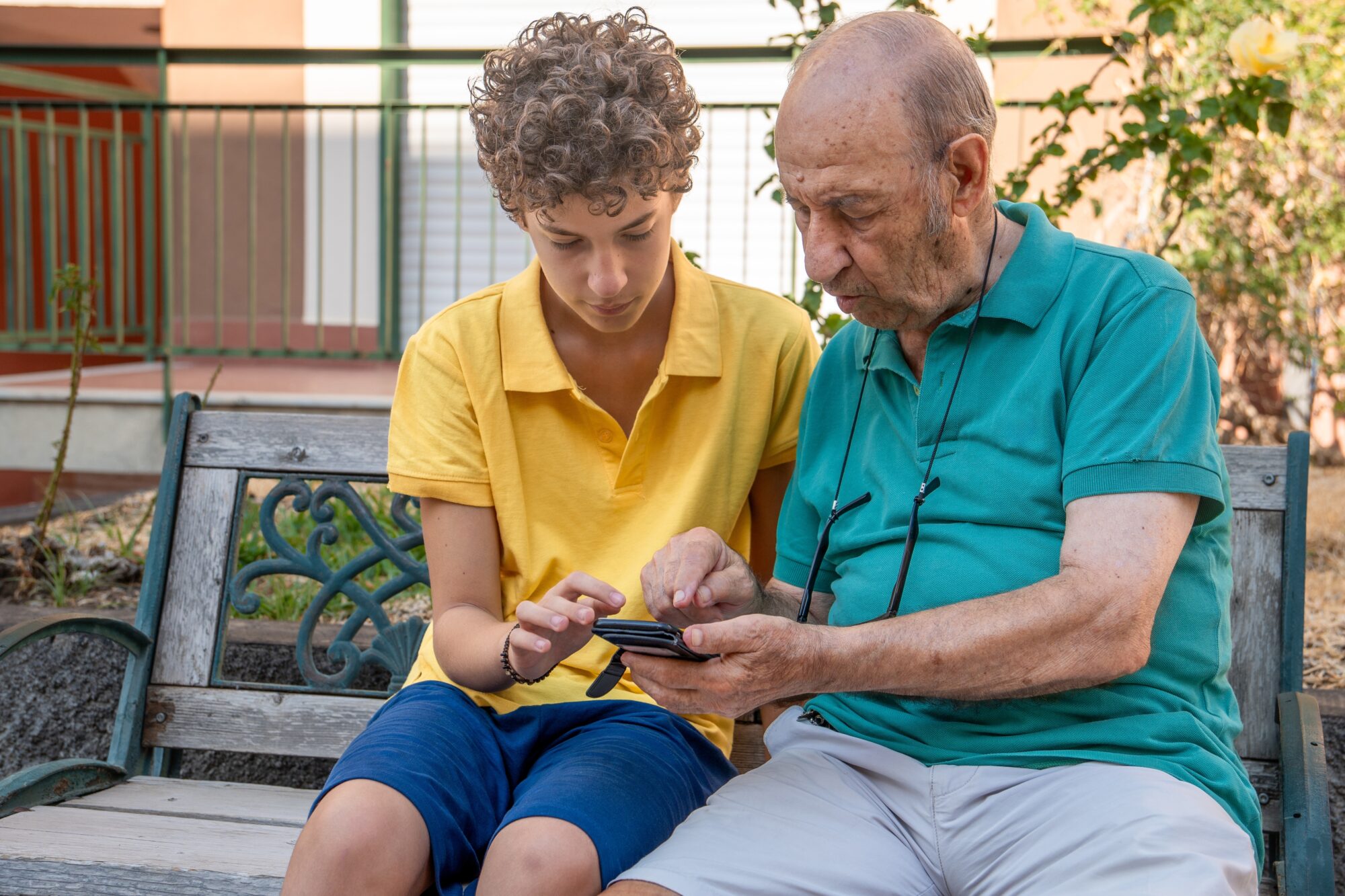
As part of the ‘Intergenerational cohesion’ project, a team led by Alexander Seifert from the University of Applied Sciences and Arts Northwestern Switzerland (FHNW) investigated how older people and their relatives maintained contact during the Covid-19 pandemic. Among other things, they conducted in-depth interviews and a nationwide survey involving almost 1,400 people. “Our results show that digital channels such as Zoom or WhatsApp – and the telephone in particular – became important,” says Seifert. However, such means of communication could not entirely replace face-to-face meetings.
“The pandemic acted as a catalyst for digital skills, but it also laid bare weaknesses as if under a magnifying glass,” says Seifert. Particularly older people sometimes had to learn new skills. Those who were unable to do so, or who did not have internet access or a suitable device, faced the risk of becoming even more excluded and thus even lonelier.
The pandemic did not affect everyone equally at school either. Although Valentin Unger and his team found that, on average, pupils in St. Gallen did not show any slower learning progress during the pandemic. This may have been partly due to the fact that digital learning systems were already in place, and the school closures were relatively short, lasting just two months. However, there are differences behind this result. “There are indications that some pupils are facing greater challenges,” says Unger. This particularly affects children and young people who were already disadvantaged before the pandemic.
One reason was a lack of didactic concepts: some teachers simply transferred their usual timetable to the internet: “Many hours of lectures on a screen overwhelm the pupils,” says Unger. He also refers to ‘Zoom fatigue’. This had consequences that went beyond learning outcomes. Many children and young people suffered from a lack of social contact, the closure of leisure facilities and the intensive use of digital media.
Learning outcomes were also closely linked to the well-being of children and young people. Those who struggled academically – perhaps because they lacked the necessary technology, a dedicated study space or support from their parents – were particularly affected by the loss of social contact, leisure activities and a fixed daily routine.
No magic solution
There are also signs within the justice system that digitalisation is widening the social divide. For those who are digitally savvy, online services could provide easier access to legal services, says Michelle Cottier. For people with limited digital skills, however, new barriers could arise – for example, because it becomes more difficult for them to make direct contact with specialists.
There are already examples along these lines, adds project team member Marina Sucari, who now works at the Department of Political Science at the University of Zurich. During the pandemic, some free legal aid offices switched to telephone consultations and continued to offer them afterward. “This makes it harder for people who speak a different language to get advice,” says Sucari. “At an in-person appointment, it would be easier for them to bring someone along for support, and communication is often easier when you can see the person you’re talking to.”
The project’s conclusion is therefore mixed. Cottier says that digitalisation can facilitate access to the justice system, but that further improvements are needed in this regard. Current law, for example, requires the consent of all parties for a hearing via videoconference—which could slow down the transition in the event of a new pandemic. “But digitalisation is no magic bullet,” says Cottier. Especially in complex family law disputes and when dealing with particularly vulnerable individuals, personal contact with professionals remains important.
Concepts for schools
Valentin Unger also recommends that schools take a measured approach to digital tools. The COVID-19 crisis has made it clear that school is much more than just a place where math or languages are taught, he says. “It gives structure to the day, fosters friendships and social interactions, and can serve as a stabilizing counterbalance to difficult circumstances at home.” The key is to use digital tools where they add educational value—for example, when students work together on assignments regardless of time or location.
According to Unger, Swiss schools are better prepared for a future crisis than they were in 2020. Digital ways of working are now more established. Nevertheless, contingency plans are still lacking in many places. The NRP-80 project has developed guiding questions that schools can use to develop such plans. This also involves identifying pupils who need special support at an early stage. That could even mean continuing to provide in-person instruction to individual children and teenagers in small groups despite school closures, says Unger. “If students lack the necessary devices, software, support, or a quiet place to study at home, distance learning won’t work.”
How much digitalisation?
Alexander Seifert of the ‘Intergenerational cohesion’ project also emphasizes the importance of combining digital and analogue channels. “The use of digital devices declines significantly, especially among people over 80—for this age group, a purely digital substitute for in-person interactions is hardly feasible.” Government agencies and associations should therefore not simply post information online. Otherwise, some people will be left behind in future crises.
At the same time, targeted support for digital literacy is important. “Because digital skills themselves are becoming a factor in social inequality,” says Seifert. The problem won’t solve itself just because future generations of older people are growing up with computers and smartphones. “Technology is advancing at a rapid pace. Even those who are digitally savvy today may find themselves left behind in just a few years.” Continuous support is needed—for example, from children and grandchildren—when a new operating system, an app, or online banking presents challenges.
Seifert also poses what is perhaps the most fundamental question raised by the results of the three projects: How much digitalization do we, as a society, actually want? And conversely: How many opportunities for in-person interactions should be preserved? After all, digital tools can make schools, government agencies, and society more capable of taking action during a crisis. But not everything works equally well digitally for everyone.
References:
- NRP 80 research project: Digitising educational practice
- NRP 80 research project: Digital justice in family law
- NRP 80 research project: Intergenerational cohesion
- NRP 80 usage model: Physically separated teaching
- NRP 80 practical guidance: Intergenerational cohesion
Image: Shutterstock.com

