They Are Not Just Victims: What the COVID-19 Pandemic Reveals About Migrant Domestic Workers
Myrian Carbajal, Emma Gauttier, Christina Mittmasser, Milena Chimienti
16th June 2026
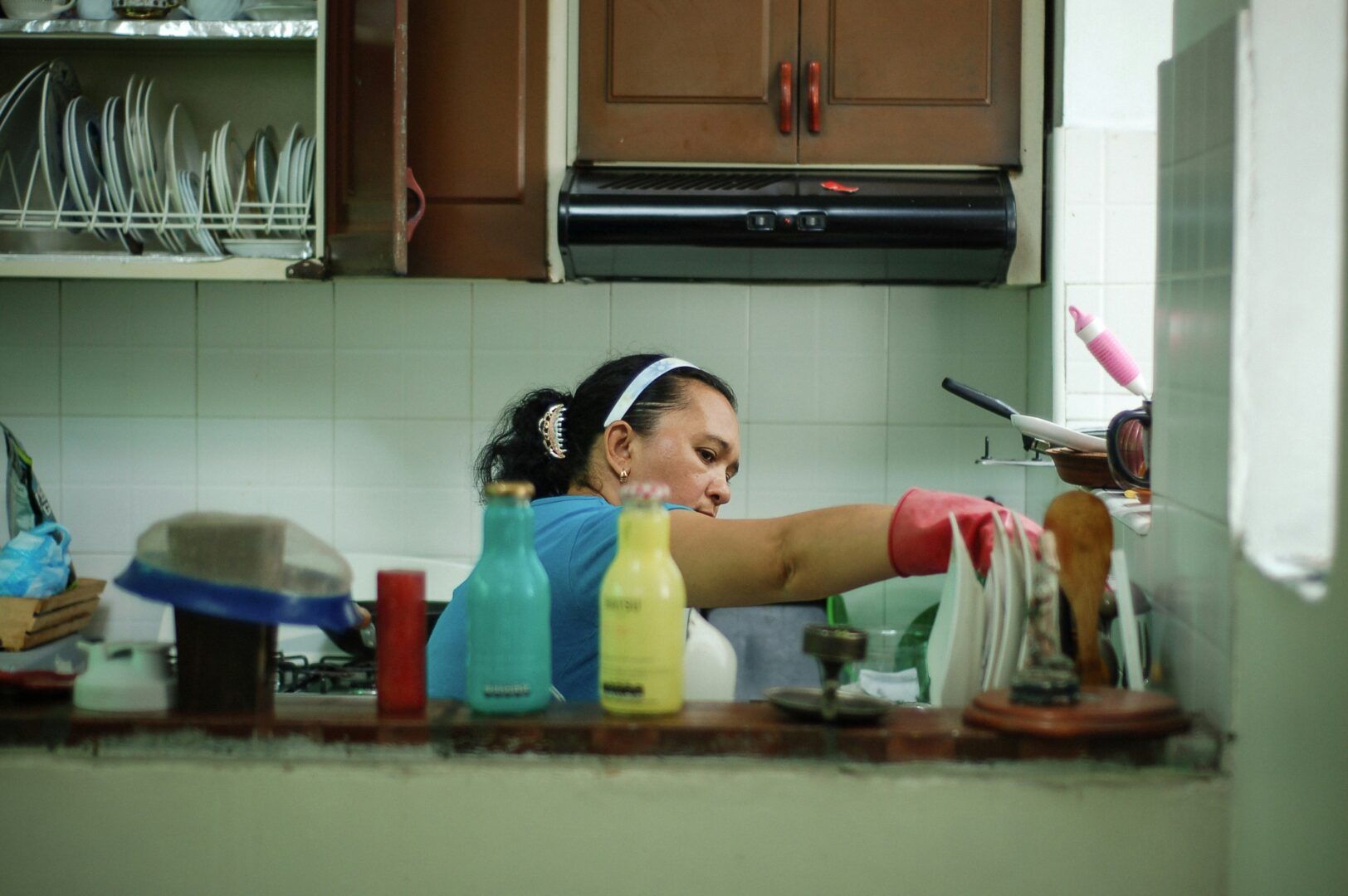
The COVID-19 pandemic exposed the extreme precariousness of migrant domestic workers in Switzerland. Yet behind the media narratives of distress lies a more complex reality: these women are not only vulnerable, they also develop strategies for action and resistance. Revisiting their experiences, research reveals a fundamental tension between structural constraints and the capacity to act.
When a Crisis Reinforces Stereotypes
During the pandemic, migrant domestic workers occupied a paradoxical position. Essential to the functioning of society, in terms of childcare, eldercare and cleaning, they nonetheless remained largely invisible.
Swiss media coverage focused primarily on their vulnerability: job losses, lack of rights, dependence on food aid. While these realities are undeniable, this uniform portrayal is problematic. It reduces these women to passive figures, obscuring both their diversity and their capacity for agency.
Behind the Uniformity: Diverse Trajectories
An analysis of more than 90 interviews with domestic workers reveals strongly heterogeneous situations. Three profiles emerge.
Women in hyper-vulnerability live without residency status and work informally. During the pandemic, many lost their income with no access to public support. In response, they mobilised informal networks, such as family, friends, support organisations, and adopted a pragmatic stance toward their employers, such as avoiding complaints in order to keep their jobs.
Those on the tipping point hold precarious residence permits and work in both formal and informal arrangements. Fearing consequences for their legal status, they hesitated to seek social assistance and depended on their employers’ goodwill to maintain their permits. Even so, they developed a solid understanding of the system and drew on existing support networks.
Finally, workers in more stable situations, with secure residence permits, citizenship, or formal contracts, benefited from formal protections and maintained their incomes during the pandemic. That said, domestic work performed directly in private households, without an intermediary, remains less well protected by labour law than employment through agencies. Their room to manoeuvre rested on choosing “good” employers and diversifying their activities, for instance, taking on cleaning work in hotels or offices through agencies.
Agency: Acting Despite Constraints
These trajectories show that vulnerability and agency are not opposites, but coexist.
Far from being mere responses to constraint, the strategies developed by these women reflect a genuine capacity to interpret their situations and make choices. Whether negotiating with an employer, activating a network, or declining certain forms of assistance to protect their residency status, their decisions reveal how they navigate complex power relations shaped by gender, class, and migration regimes.
These women also draw attention to their sense of responsibility, their work ethic, and their financial independence. One of them put forward: “But believe me, I’ve learned to laugh, because I’m tired of crying. But there have always been very, very difficult moments. […] We (people without residency status) do not feel sorry for ourselves. It is not about portraying ourselves as victims.”
Changing the Lens to Act More Effectively
Acknowledging the diversity of experiences is not merely an analytical matter, it is a prerequisite for rethinking public policy.
The pandemic exposed a central ambivalence in migration governance: the state appears simultaneously as a guarantor of fundamental rights and as an agent of exclusion. On one hand, it supports, regulates, and protects. On the other, it produces forms of marginalisation that leave a portion of domestic workers in legal invisibility and insecurity.
Domestic work also continues to be less protected than other sectors: low wages, limited social coverage, fragmented rights. Bringing it in line with standard labour and social legislation would be a key lever for reducing the structural inequalities the crisis has laid bare.
Finally, moving beyond a purely compassionate view is essential. Recognising these women as full social actors leads to a better understanding of their contribution to society and opens the way for a full recognition of their work.
Reference:
- Carbajal, Myrian, Emma Gauttier, Christina Mittmasser, & Milena Chimienti. 2026. Beyond victimhood: The agency of migrant domestic workers during the COVID-19 pandemic. Work Organisation, Labour & Globalisation 20(1): 39–58.
Image: Unsplash